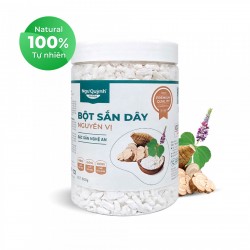

Pueraria thomsonii starch, passion fruit is a product made from pure Pueraria thomsonii starch, combined with the refreshing taste of passion fruit, creating a light, easy-to-drink beverage rich in natural nutrients.
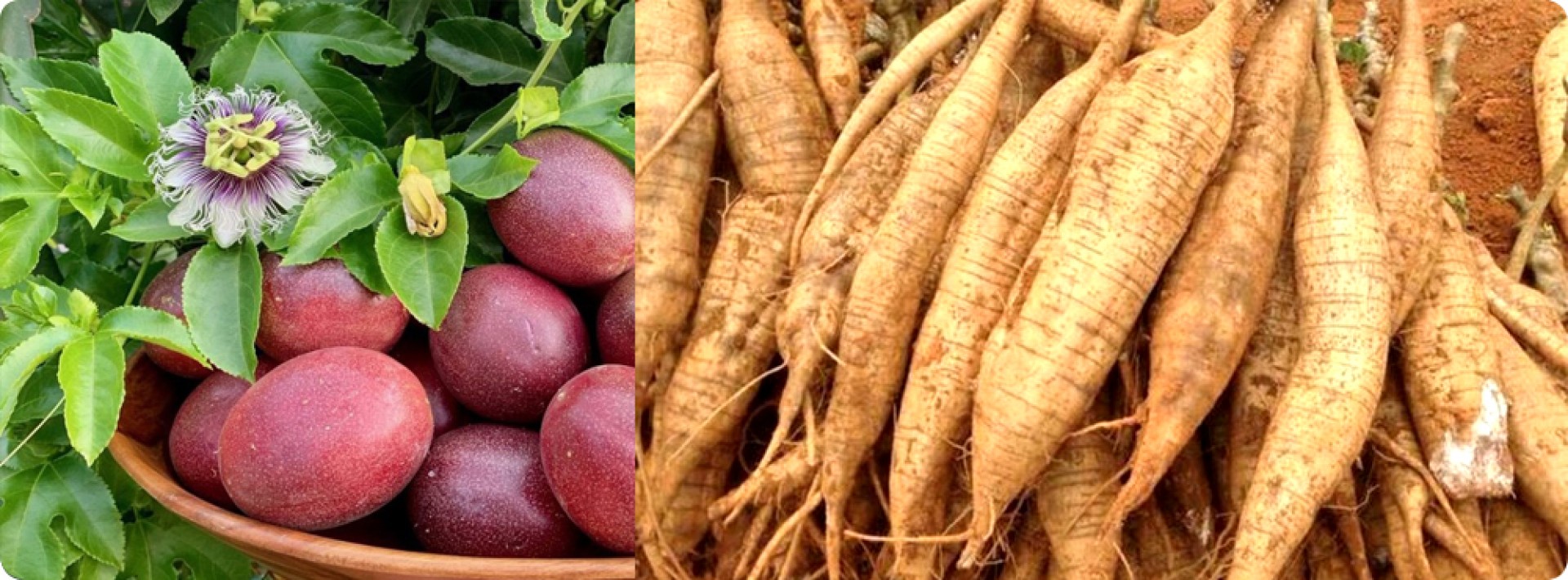
Pueraria thomsonii is the tuber of a climbing plant belonging to the legume family. It grows vigorously, with roots that penetrate deep into the soil. Pueraria thomsonii tubers are usually large and long, with each plant potentially yielding dozens of large tubers. The starch extracted from the Pueraria thomsonii tuber is the most valuable and delicious part, used in the preparation of food and beverages.
Not only the tuber, but also the leaves and roots of the Pueraria thomsonii plant have long been used in folk medicine to support the treatment of various ailments, demonstrating the comprehensive value of this plant.
Combining Pueraria thomsonii starch with the mild, refreshing taste of passion fruit, this product offers a pleasant and refreshing experience, suitable for many people, especially on hot days.
Currently, there are two types of kudzu root on the market: native kudzu root and hybrid kudzu root. Native kudzu root yields lower production but is of better quality, while hybrid kudzu root yields higher production due to its higher starch content, but its quality is not as good as the native variety. Most households tend to grow the hybrid variety for higher yields, although some areas still cultivate the native variety to ensure the best quality. Therefore, the price of hybrid kudzu root is lower than that of the native variety.
The process of making Pueraria thomsonii starch is very elaborate and takes a considerable amount of time to produce the finished product. Ngu Quynh Foods would like to introduce the specific steps as follows:
Step 1 - Selecting cassava tubers:
After harvesting, the cassava tubers are trimmed at the ends and then sorted into different grades. The larger the tubers, the more starch they yield, and these are considered high-grade starch. Smaller tubers yield less starch because they often contain more fiber, while medium and small tubers yield grade 2 and 3 starch.
Step 2 - Peeling and Cleaning:
After sorting the cassava tubers, wash them thoroughly, removing any dirt and sand from the outer skin. Then, peel and wash them again to ensure the powder is as white as possible and free of any remaining dirt or sand.
Step 3 - Grinding and Filtering:
Put each cassava tuber into a blender and grind it thoroughly. Then, add water and mix it with the remaining pulp in a 1:4 ratio. Use a clean white cloth to strain the mixture, discarding the pulp.
Step 4 - Filtering the starch:
After straining the cassava starch water, pour it into a clean basin. Wait for the starch to settle to the bottom as a hard powder, then pour off the clear water on top. Then add more water, stir well, and wait until the powder settles again. Repeat the process of pouring off the clear water as before. Continue this process until all impurities are removed from the starch; the more times you filter, the cleaner the starch will be.
Step 5 - Drying the starch:
Pour the starch into a dry, rust-free stainless steel tray and place the tray in the drying chamber. Dry at a suitable temperature for 12-15 hours until the starch forms dry lumps, yielding the finished product.
Step 6 - Harvesting:
Let it cool and transfer the cassava starch into glass or PET plastic jars to ensure optimal preservation.
In Traditional Chinese Medicine, kudzu powder is considered a medicinal ingredient with many uses, such as treating colds, boils, constipation, detoxifying the liver, and improving gut health. Additionally, kudzu powder has beauty benefits for women when consumed daily or combined with eggs, honey, etc., to make face masks.
In Traditional Chinese Medicine, kudzu powder is considered a medicinal ingredient with many uses, such as treating colds, boils, constipation, detoxifying the liver, and improving gut health. Additionally, kudzu powder has beauty benefits for women when consumed daily or combined with eggs, honey, etc., to make face masks.
1. Health Benefits
Calcium Supplementation:
Cassava powder contains a sufficient amount of calcium to provide essential nutrients. This mineral is crucial for strong bones. Furthermore, it significantly improves numbness in the hands and feet due to its effect on blood circulation.
Iron Supplementation:
Iron is an indispensable component of the body. Drinking a cup of cassava powder daily will keep you alert and prevent anemia.
Helps relieve colds and lower body temperature:
Cassava starch is a very effective cooling and heat-reducing remedy. Therefore, when suffering from fever, sore throat, mouth ulcers, or boils, using it will significantly reduce symptoms.
Helps improve gut health:
Cassava starch contains a quantity of soluble fiber, which stimulates digestion. Soluble fiber helps develop beneficial bacteria, boosting the body's immunity and fighting intestinal disorders, thereby improving health.
Liver detoxification and cooling:
Kudzu starch powder can promote the elimination of toxins from the body, therefore, in cases of liver heat, hangovers, or alcohol poisoning, drinking kudzu starch will help reduce these conditions effectively, protecting liver health.
Supports cardiovascular health:
Kudzu starch powder does not contain saturated fat (the type of fat that increases bad cholesterol in the blood), so it can help reduce the risk of cardiovascular problems such as high blood pressure and other cardiovascular diseases.
2. Beauty Benefits
Anti-aging and freckle reduction:
Kudzu powder contains isoflavones and estrogen, which help prevent excessive melanin production, thus fading freckles and preventing their recurrence effectively. Drinking kudzu powder daily will improve blood circulation, thereby preventing aging and reducing wrinkles.
Skin whitening:
Isoflavones and lipids help whiten skin effectively, but quite slowly. Therefore, consistent use over a long period is necessary.
Acne treatment: Kudzu powder has a high cooling effect, helping to reduce heat and inflammation. It contributes to healing wounds and acne scars.
Sunburn skin recovery:
Kudzu powder contains many antioxidants, especially isoflavones, which are effective in restoring sunburnt skin.
Skin care mask:
Making a face mask with cassava starch, egg yolk, and strawberries regularly 3 times a week will make your skin brighter and reduce dark spots and freckles.
1. Mixing tapioca starch with warm water:
Add 2-3 teaspoons of tapioca starch to 15ml of cold water, stir well until dissolved, then add 100ml of boiling water. Add a little sugar to make it easier to drink if you are new to drinking it.
2. Mixing tapioca starch with condensed milk:
Mix 10ml of condensed milk with 200ml of warm water and let it cool, then add 2-3 teaspoons of tapioca starch and stir well. Continue to cook the mixture over low heat, stirring constantly. When small bubbles appear on the surface, turn off the heat, let it cool, and enjoy.
3. Mixing tapioca starch with lemon:
Mix 2-3 tablespoons of tapioca starch, 1 tablespoon of sugar (if you want it sweeter) with 15ml of filtered water, then add 100ml of boiling water, stir well and let cool. Squeeze in half a lemon and add some ice to enjoy.
4. Mixing tapioca starch with mung bean powder:
Mix 1 tablespoon of tapioca starch with 1 tablespoon of mung bean powder, add 1 tablespoon of sugar and 200ml of cold water, stir well until dissolved, then turn off the heat, let cool and enjoy.






Customers purchase and use the product nationwide.
The percentage of customers who give 5-star reviews and return to buy the product.
Favorite and best-selling products on Shopee, Tiki, and Lazada.


© 20019 - 2025 Ngu Quynh Foods Co., Ltd.; Business registration number 2901970215; issued on 30/01/2019 at the Department of Planning and Investment of Nghe An
• Factory: Tan Xuan hamlet, Quynh Anh commune, Nghe An province.
• Office: Gemek 2, Le Trong Tan Street, An Khanh, Hanoi.
• Phone number: 0961068006 • Email: cskh@nguquynh.com.vn