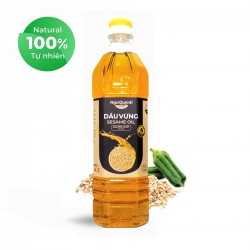
Ngu Quynh Foods natural and pure peanut oil is a special cooking oil, ideal for family cooking. Unlike many peanut oil brands on the market, Ngu Quynh Foods uses high-quality peanuts, pressed using a low-temperature process to preserve the natural flavor and valuable nutrients. The characteristic aroma and rich taste of roasted peanuts bring sophistication and appeal to every dish.
The product is produced in Nghe An, has low saturated fat content, contains absolutely no trans fat, rich in healthy omega-6 fatty acids. The oil has a natural golden color, high smoke point (450°F / 232°C), is an ideal choice for quick frying, large batch frying or used as a premium oil to enhance the peanut flavor of delicate dishes.
Ngư Quỳnh Foods peanut oil is produced in small batches, using hand-selected whole peanuts from Nghe An, ensuring that every drop of oil retains the most natural quality and flavor.
There are several different types of peanut oil. Each is made using different techniques:
Peanut oil is widely used around the world but is most popular in Chinese, South Asian and Southeast Asian cuisines. It became more popular in the United States during World War II when other oils were scarce due to food shortages.

1. Harvesting: Quynh Bang is the commune with the largest peanut growing area in Quynh Luu district. April is the spring harvest season. After being harvested, peanuts are dried and stored for use in oil pressing.
2. Cleaning: Peanuts are peeled to remove seeds and cleaned of dirt before being pressed for oil.
3. Heat pressing: Peanuts after careful selection are roasted by a heat dryer to a certain degree of ripeness of about 70-80%. The oil after being pressed from the machine has a delicious, fatty aroma suitable for cooking.
4. Filtering: The oil after being pressed will have residue from the raw material, so the filtering stage is very important. The oil is put into the filter to produce drops of pure, clean, golden oil.
5. Bottling: The oil is bottled according to the bottling process, labeled on a specialized machinery line that meets ISO standards.
Peanut oil is high in antioxidants and good fats that can keep your heart healthy and lower blood sugar levels. Using peanut oil for cooking can provide health benefits including:
1. Heart Health
With its high content of vitamin E and monounsaturated and polyunsaturated fats (the “good” unsaturated fats), peanut oil is good for the heart. Studies have shown that replacing saturated fats with these unsaturated fats contributes to a reduced
risk of heart disease.
Other studies have found that vitamin E protects the body from free radicals, which can damage cells and cause certain cancers and cardiovascular disease.
2. Control Diabetes
Some studies have linked unsaturated fats to improved blood sugar levels in people with diabetes. Consuming polyunsaturated fats instead of saturated fats may also improve insulin secretion, which helps keep blood sugar levels low.
Lower Cholesterol: The monounsaturated fats in peanut oil may also help you lower your LDL cholesterol, also known as “bad” cholesterol. High LDL can clog your arteries, leading to heart disease and stroke.
3. Prevent Cancer
Research has shown that for older adults, eating peanut butter can help reduce the risk of developing a certain type of stomach cancer - non-cardiac adenocarcinoma.
4. Prevent Gallstones
Consuming 28.35 grams of peanuts per week will help reduce the risk of developing gallstones by 25%.
5. Prevent and fight depression
Nutritional components in peanut oil include the amino acid tryptophan, which plays an important role in the production of serotonin, a compound that benefits the brain and helps improve mood and reduce depression.
6. Enhance memory
Vitamin B3 and niacin in peanut oil provide many health benefits, including improving brain function and promoting memory.
7. Reduce cholesterol in the body
Peanuts contain nutrients that help reduce and control cholesterol levels in the body. Moreover, they also help reduce bad cholesterol and increase good cholesterol, bringing health benefits to the body.
8. Help prevent dementia in the elderly
The source of niacin in peanuts helps reduce the risk of Alzheimer's disease by 70%.
9. Reduce the risk of birth defects
The source of folic acid contained in peanuts helps pregnant women get about 400 micrograms per day, thereby increasing the effectiveness of reducing the risk of giving birth to a child with a neural tube defect by 70%.
Used for frying, stir-frying
Used for salad dressings and sauces
Marinating food
Use for baking, daily cooking
Use as a finishing oil
Hạt lạc mà Ngư Quỳnh được sử dụng để ép dầu được lấy từ vùng trồng Nghệ An. Nghệ An là vùng khí hậu, thổ nhưỡng phù hợp với sự phát triển của giống lạc nên cho ra sản lượng và chất lượng tốt nhất.
Dầu lạc Ngư Quỳnh được sử dụng công nghệ ép nhiệt. Hạt lạc sau khi được lựa chọn kỹ được sấy bằng máy sấy nhiệt có độ chín nhất định khoảng 70-80%. Nên sản phẩm sau khi ép có mùi thơm ngon, béo ngậy thích hợp sử dụng nấu ăn.
Dầu Lạc có thể giúp làm dịu da khỏi những kích ứng nhỏ đồng thời giảm mẩn đỏ. Khả năng chống oxy hóa được tìm thấy trong hàm lượng Vitamin E của nó giúp chống lại các gốc tự do gây lão hóa. Là một chất làm mềm phong phú, Dầu Lạc có thể giúp dưỡng và giữ ẩm cho làn da trông mềm mại, mịn màng và rạng rỡ hơn.
Nếu chưa mở nắp, dầu đậu phộng có thể sử dụng trong 12 tháng. Nếu mở nắp, thời hạn sử dụng của dầu lạc giảm xuống còn khoảng sáu tháng.
Hầu hết các loại dầu thực vật đều giàu omega-6, nên điều cần thiết và duy trì sự cân bằng giữa axit béo omega-3 và omega-6 trong chế độ ăn uống của bạn. Mặt khác, dầu lạc có tỷ lệ axit béo omega-6 và omega-3 cân bằng hơn, khiến nó trở thành lựa chọn tốt hơn cho những người lo lắng về tình trạng viêm nhiễm.
Dầu lạc tinh luyện có hương vị trung tính, điểm bốc khói cao và là loại dầu lạc dùng để chiên ngập dầu. Dầu đậu phộng chưa tinh chế có hương vị tự nhiên của hạt lạc và thường được dùng để chế biến các món xào, chiên, trộn Salad...
Làm sản phẩm dưỡng da, Chăm sóc tóc…..
Với hàm lượng vitamin E cao và chất béo không bão hòa đơn và không bão hòa đa ("chất béo tốt" không bão hòa), dầu đậu phộng có thể tốt cho tim. Các nghiên cứu đã chỉ ra rằng việc thay thế chất béo bão hòa bằng các loại chất béo không bão hòa này góp phần làm giảm nguy cơ mắc bệnh tim.






Customers purchase and use the product nationwide.
The percentage of customers who give 5-star reviews and return to buy the product.
Favorite and best-selling products on Shopee, Tiki, and Lazada.


© 20019 - 2025 Ngu Quynh Foods Co., Ltd.; Business registration number 2901970215; issued on 30/01/2019 at the Department of Planning and Investment of Nghe An
• Factory: Tan Xuan hamlet, Quynh Anh commune, Nghe An province.
• Office: Gemek 2, Le Trong Tan Street, An Khanh, Hanoi.
• Phone number: 0961068006 • Email: cskh@nguquynh.com.vn